Are lifetime garage door springs worth it?
The lifetime upgrade costs more up front and is rated to last much longer. Whether that trade is worth it depends entirely on your house. Here's the straight math so you can decide for yourself.
4.9 from 111 Google reviews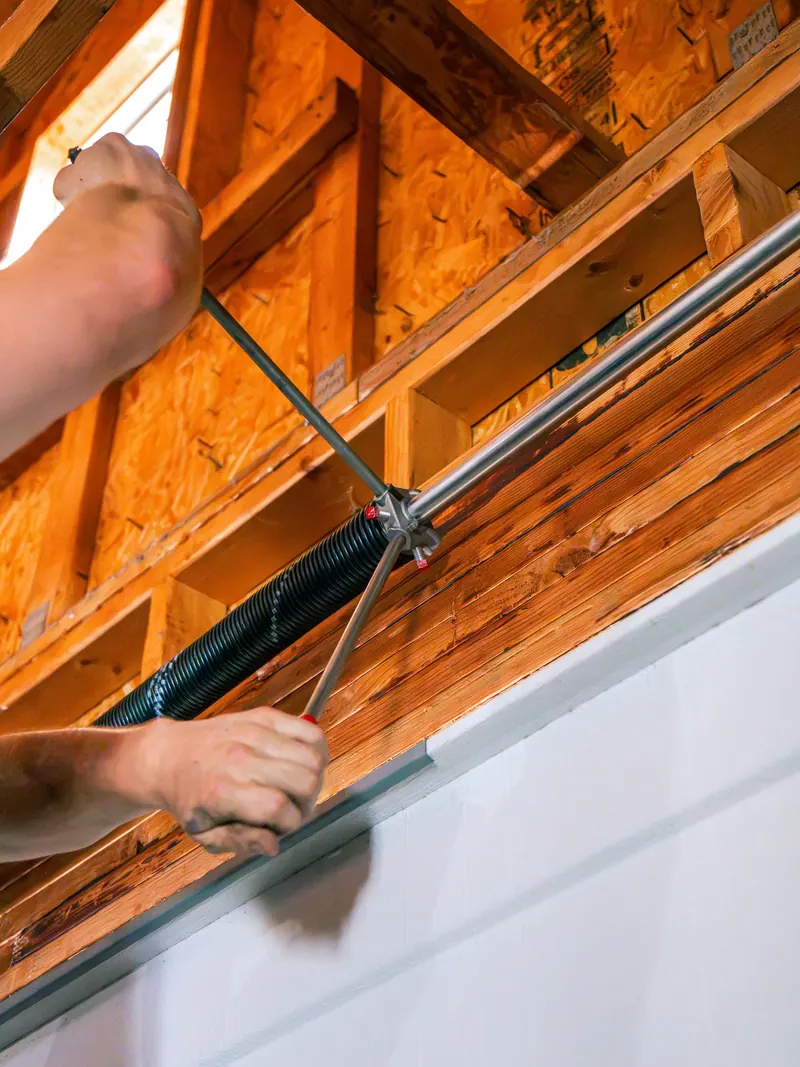
When a spring breaks and a technician is already at your door, you'll often get the question: standard or lifetime? It's a fair question, and it deserves a real answer rather than a sales line. The upgrade isn't right for every home, but for the right one it's some of the best money you can spend on a garage door. Here's how to tell which you are.
What "lifetime" actually means
Garage door springs are rated in cycles, and one cycle is one open and one close. A standard builder-grade spring is rated around 10,000 cycles. A lifetime or high-cycle spring is built heavier and rated around 25,000 to 30,000 cycles and up, so roughly two to three times the working life. "Lifetime" is shorthand for that much longer cycle rating. It doesn't mean the spring lasts forever, and it doesn't come with a lifetime warranty: a high-cycle spring carries the same 1-year warranty as a standard one. If the cycle idea is new to you, our guide on how long garage door springs last walks through the math in full.
The up-front cost
The whole decision comes down to a few hundred dollars today against a longer runway. A standard spring is rated around 10,000 cycles; a higher-cycle ("lifetime") pair is rated around 25,000 to 30,000+ cycles, two to three times the life for a few hundred more up front. Whether that's a good buy is entirely about how long you'll keep the door and how hard you use it. We give you a free estimate on both so you can compare.
The payback math
Run it for an average door: four open-close cycles a day, about 1,460 a year. A standard 10,000-cycle spring lasts roughly seven years. A 25,000-cycle pair lasts closer to seventeen. Over the time you own a home, the standard route means a second (and maybe a third) spring repair: another visit, another set of parts, another morning waiting around the house. The lifetime pair often skips all of that. If the upgrade saves you even one future spring replacement, it has more than paid for itself, and on a busy, daily-use door it usually saves you more than one.
When the upgrade is worth it
- It's a home you'll keep. The longer you stay, the more future spring repairs the upgrade lets you skip. On a forever home, it's an easy yes.
- The door gets heavy daily use. If the garage is your main entrance (kids, errands, a side-door layout), you're burning cycles fast, and the high-cycle spring earns its keep quickest here.
- You're already servicing a two-spring door. Both springs are coming off and going back on regardless. Upgrading at that moment costs only the difference in parts.
When standard is plenty
- You're selling soon. A standard spring is a perfectly good fix, and you won't be around to collect on the longer life. Put the savings toward the move.
- The door gets very light use. A few cycles a week means even a standard spring can last well past twenty years. The math for upgrading just isn't there.
- Budget is tight today. A standard spring gets your door working at a lower up-front cost, and there's nothing wrong with that. You can always go high-cycle next time around.
The honest take
Lifetime springs are a longer-lasting part that makes clear sense on a daily-use door you plan to keep, and they're overkill on a lightly used door or a house you're about to sell. We'll give you a free estimate on both options, tell you which way the math points for your situation, and let you make the call.
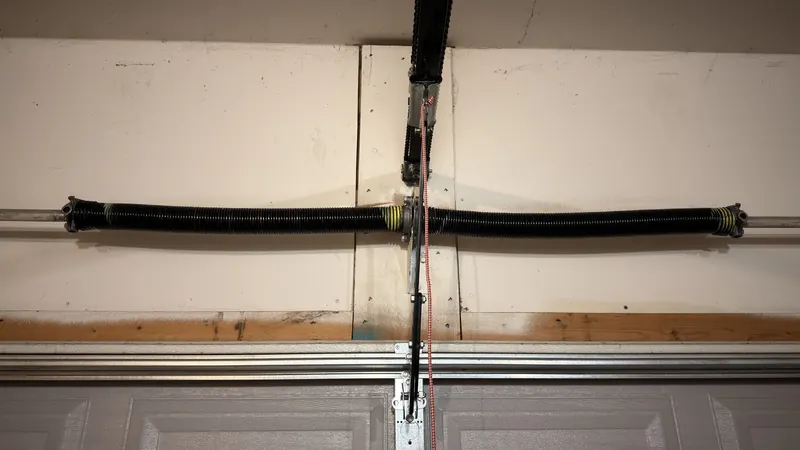
Broken spring repair
Door won't go up, or you heard a loud bang in the garage. We put a new pair of springs on, usually the same visit.
High-cycle springs questions
What are lifetime garage door springs?
They're high-cycle springs rated for far more open-close cycles than a standard builder spring. Where a standard spring is rated around 10,000 cycles, a lifetime spring is typically rated 25,000 to 30,000 cycles or more, built with more steel and wound to take the extra wear. "Lifetime" refers to that much longer cycle life. It isn't a forever promise, and these springs carry the same 1-year warranty as a standard spring.
How much more do lifetime springs cost?
The higher-cycle upgrade costs more up front than a standard spring, typically a few hundred more for the pair, to roughly double or triple the cycle life. We give you a free estimate on both so you can compare.
Do lifetime springs actually pay for themselves?
On a door you use daily and plan to keep, usually yes. A standard spring might last you about seven years at four cycles a day; the high-cycle pair can last two to three times that. If the upgrade saves you even one future spring repair (the labor, the parts, and a morning waiting around), it tends to come out ahead over the life of the door.
When is a standard spring the better choice?
When you're selling the house soon, when the door gets very light use (a few times a week), or when budget is tight today and the door is otherwise sound. There's no shame in a standard spring. It's what most homes run, and for low-cycle doors it can outlast you anyway.
Should I replace both springs or just the broken one?
If your door uses two springs, replace both as a matched pair, and that's exactly the moment a higher-cycle option makes the most sense, since you're already paying to service both. Mixing a new high-cycle spring with an old standard one means the old one fails first and you're back to square one.
More garage door guides
Broken garage door spring: signs, cost & next steps.
Spot a broken spring, understand why it failed, and know the real replacement cost.
Balance testHow do I test if my garage door is balanced?
A two-minute test that tells you if the springs are still doing their job, and when to stop and call.
Spring lifeHow long do garage door springs last? It comes down to cycles.
Cycle life explained: what a 10,000-cycle rating means in real years for your door.
Free estimates. No after-hours fee.
4.9 from 111 Google reviewsSame day service. You hear the price before any work begins.