Are insulated garage doors actually worth it?
R-value, polystyrene vs. polyurethane, and the honest answer for a West Michigan garage, including when insulation is a waste of money and why bolting a DIY kit onto your existing door can throw the whole thing out of balance.
4.9 from 111 Google reviews
The garage door is usually the largest single panel on a house, and on many West Michigan homes it's the only one with no insulation behind it at all. That matters more here than in most places: we go from below zero in January to a garage baking in the 90s in July. But "insulated" gets used loosely on showroom floors, and the honest answer to whether it's worth it depends on what your garage is attached to and what you actually use it for.
What R-value actually tells you
R-value measures resistance to heat flow: the higher the number, the slower heat moves through the material. A plain single-layer steel door is effectively uninsulated. A basic insulated door starts around R-6, mid-range doors land in the R-9 to R-13 range, and premium steel-polyurethane doors reach R-18 or higher.
The catch worth knowing before you shop: that number covers the door section only, and the gaps around it don't count. A high-R door with a worn bottom seal and gaps down the sides is leaking air around the very panel you paid extra for. Weather seals are cheap compared to the door, and on an older door, replacing a cracked bottom seal and the perimeter stop molding is often the single most cost-effective comfort upgrade you can make.
Polystyrene vs. polyurethane
Two kinds of insulation show up in garage doors, and they behave differently.
Polystyrene is rigid foam board, cut to size and fitted into each section. It's a genuine improvement over an empty door and it's the more affordable option. Because it's a fitted panel rather than a bonded one, small voids around the edges are normal.
Polyurethane is injected as a liquid and expands in place, filling every cavity and bonding to both steel skins. It delivers more insulation per inch, and (the part people don't expect) it makes the section dramatically stiffer and quieter. A bonded sandwich panel doesn't drum and vibrate the way a hollow one does, and it resists dents from a stray basketball far better. If your garage shares a wall with a bedroom, that noise difference often matters more than the R-value.
When insulation is genuinely worth it
- Attached garages with living space above or beside them. This is the strongest case. The bonus room over the garage is the room everyone complains about, and a garage that isn't swinging 60 degrees between seasons makes it far more livable.
- Heated or workshop garages. If you run a heater out there at all, an uninsulated door is where most of that heat goes.
- Garages you spend real time in. Home gym, workbench, kids' hangout: the comfort difference is immediate and obvious.
- Anywhere noise matters. Insulated sections are quieter in operation and block more street noise.
The DIY insulation kit trap
The hardware-store kits that stick foam panels to the inside of an existing door do work, up to a point. What the box doesn't tell you is that a garage door is a counterbalanced machine: the springs above the opening are wound to offset the exact weight of your door. Add 20 or 30 pounds of insulation and that balance is off.
What follows is predictable. The door gets heavy to lift by hand. It drifts down instead of staying put halfway. The opener is built to guide a balanced door, so it strains on every cycle when it has to lift a heavy one, and both the opener and the springs wear out sooner than they should. If you've added a kit, or you're planning to, have the balance checked and the spring tension adjusted to match the new weight. It's a quick job, and it's the difference between a kit that helps and a kit that quietly costs you an opener.
There's a second, quieter issue: a foam kit doesn't change the seals. If the light's coming in around the edges of your closed door, so is the weather, kit or no kit.
What we'd tell a neighbor
If the door is already on its last legs and there's a room over the garage, get an insulated steel-polyurethane door when you replace it. You'll notice the quiet immediately and the comfort through the first winter. If the door is sound, start with the seals and a tune-up before you spend on anything bigger. And if you're not sure which camp you're in, that's a five-minute conversation.
We install new garage doors across the Grand Rapids metro. We'll measure the opening and tell you honestly what's worth doing, with a free estimate. We're out seven days a week, with same day service.
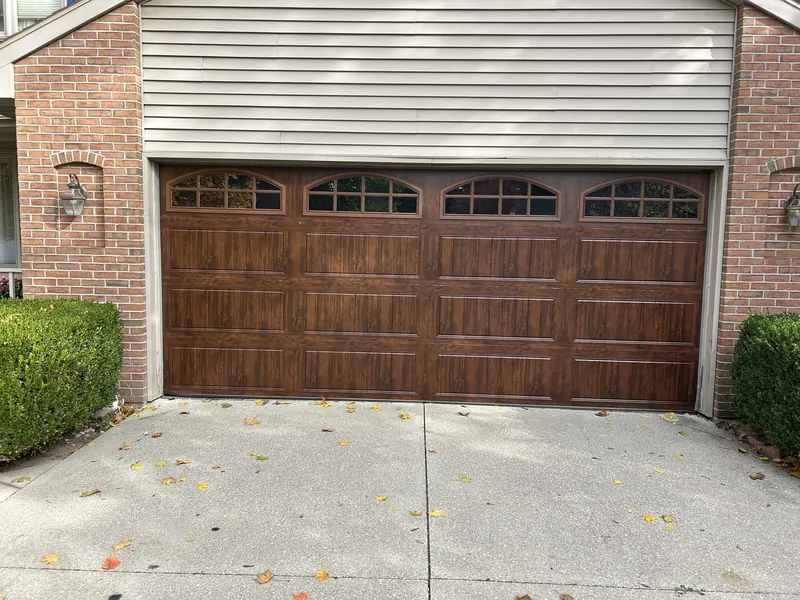
New garage doors
Insulated steel, carriage house, modern and full glass. We measure in person and give you one price.
Insulated doors questions
Are insulated garage doors worth it in Michigan?
For most attached garages, yes, especially one with living space above it or a room sharing a wall with it. Michigan swings from below zero in January to the 90s in July, and the garage door is the largest uninsulated panel on most houses. An insulated door slows that heat transfer year-round, and it also runs quieter and resists dents better than a single-layer steel door. For a detached garage you never heat and never use in winter, the case is much weaker.
What does R-value mean on a garage door?
R-value measures how well a material resists heat flow. A higher number means more resistance. Garage doors range from about R-6 on a basic insulated door to R-18 or higher on a premium steel-polyurethane door, while a plain single-layer steel door is essentially uninsulated. One caution: the number covers the door section only, so the seals around the door matter as much as the panel rating.
What's the difference between polystyrene and polyurethane insulation?
Polystyrene is rigid foam board cut and fitted into the door sections. It's affordable and a real improvement over nothing. Polyurethane is foam injected into the section and expanded in place, so it bonds to the steel skins and fills every void. Polyurethane gives more insulation per inch, and because it's bonded it makes the whole section stiffer and quieter. Most higher-R doors are polyurethane.
Will an insulated garage door actually keep my garage warm?
It'll make the garage noticeably less extreme, because insulation slows heat moving through the door. If the garage walls and ceiling are uninsulated and the perimeter seals leak, the door alone can only do so much. The biggest and most reliable benefit is to the rooms next to and above the garage, which stay more comfortable because the buffer space isn't swinging as hard.
Can I add an insulation kit to my existing garage door?
You can, but do it with your eyes open. A garage door is counterbalanced by springs matched to its exact weight, and adding an insulation kit makes the door heavier. If the spring tension isn't adjusted to match, the door gets hard to lift by hand, the opener strains, and both the springs and the opener wear out faster. If you add a kit, have the balance checked and the springs adjusted afterward.
More garage door guides
Garage door repair vs. replace: how to decide.
The age, damage, and cost lines that decide whether to fix it or start fresh.
High-cycle springsAre lifetime garage door springs worth it?
When the higher-cycle upgrade pays for itself, and when a standard spring is plenty.
Choosing a companyBest garage door repair in Grand Rapids.
The local and national options, how they differ, and how to pick the right one.
Free estimates. No after-hours fee.
4.9 from 111 Google reviewsSame day service. You hear the price before any work begins.