Garage door repair vs. replace: how to decide.
A snapped spring doesn't mean you need a new door. A rotted bottom panel might. Here's an honest framework for deciding whether to fix what you've got or start fresh, with a free, up-front estimate so you can do the math yourself.
4.9 from 111 Google reviews
The instinct when something on the garage door breaks is to wonder whether the whole thing is shot. Usually it isn't. A garage door is a system of parts (springs, cables, rollers, opener, and the panels themselves), and most of those parts are cheap to fix relative to the door. The real question is whether you're fixing a sound door or pouring money into one that's near the end. Here's how to tell the difference.
At a glance: repair or replace
| What's going on | Usually… | Why |
|---|---|---|
| One broken spring, cable, or opener on a sound door | Repair | A single bolt-on part failed; the door itself is fine |
| One dented panel you can still match | Repair | Swapping a section costs a fraction of a new door |
| Door under about 15 to 20 years, no rot or rust | Repair | Plenty of life left and parts are easy to source |
| Several parts failing at once on an old door | Replace | You're chasing failures, and the next one's a phone call away |
| Panels rotted or rusted through | Replace | Nothing structurally sound left to repair |
| Same door fixed 3 times in two years | Replace | The repair bills usually clear the cost of new |
| Discontinued door, panels can't be matched | Replace | One dented section can force a whole new door |
| You want insulation, quiet, or a new look | Replace | Real upgrade reasons, even if the door still works |
When to repair
Repair is the right call far more often than people expect. Lean toward fixing it when:
- A single part failed on an otherwise sound door. One broken spring, one frayed cable, an opener that quit: these are bolt-on fixes. The door panels are fine; one component wore out, which is normal.
- One panel is dented and can be matched. If the door is still in production and the color matches, swapping a single section is far cheaper than a new door.
- The door is under roughly fifteen to twenty years and structurally fine. No rot, no rust-through, the panels are straight and solid. A door like that has plenty of life left, and the parts are easy to source.
- The fix is a modest fraction of a new door. If the repair buys you years more out of a good door, that's a clear repair.
The common repairs (a broken spring, a cable, a single panel) each cost a fraction of a whole new door, and we give you a free, up-front estimate so you can weigh them. Set any repair next to the cost of a whole new door and the math usually answers itself. Details on the two biggest ones live on our broken spring replacement and panel & section replacement pages.
When to replace
There's a point where repair stops being the smart money. Lean toward a new door when:
- Several parts are failing at once. Springs and cables and a tired opener on an old door means you're chasing failures. The next one is always a phone call away.
- The panels are rotted or rusted through. Wood doors rot at the bottom; steel doors rust from the inside out. Once the panels themselves are failing, there's nothing sound to repair. The structure is gone.
- Repairs are adding up. If you've fixed the same door three times in two years, you're renting time on a door that wants to be replaced. Add those bills up and they often clear the cost of new.
- It's obsolete and you can't match panels. When a door's make and model is discontinued, a single dented section can't be matched, and that forces a full replacement even if everything else is fine.
- You want insulation, quiet, or a new look. A modern insulated door is warmer over a Michigan winter, runs quieter, and changes the front of the house. Those are real reasons to replace a door that still technically works.
If it's a new door
When replacement genuinely is the answer, the next step is a measured estimate, never a number guessed over the phone. Door price depends on size, material, insulation, and whether you want steel, carriage-house, glass, or modern flush, so we measure the opening, talk through what fits the house, and put real numbers in front of you. That estimate is free, and there's no obligation to move forward. See new garage door installation for what's involved: old door hauled off, new one hung, balanced, and tuned. Before that visit, our guide on how much a new garage door costs walks through what's actually in an installed price and the four things that move it.
The bottom line
Most of the time, the door you have is worth keeping and the fix costs a fraction of a new door. The exceptions are real but specific: failing panels, doors you can't get parts for, and repair bills that keep stacking. When we come out, we price the repair up front and tell you honestly whether it's the better buy. If a new door truly is the move, the estimate for that is free and measured.
We cover the whole metro, including new door installation in Grand Rapids, Wyoming, Kentwood, and Grandville.
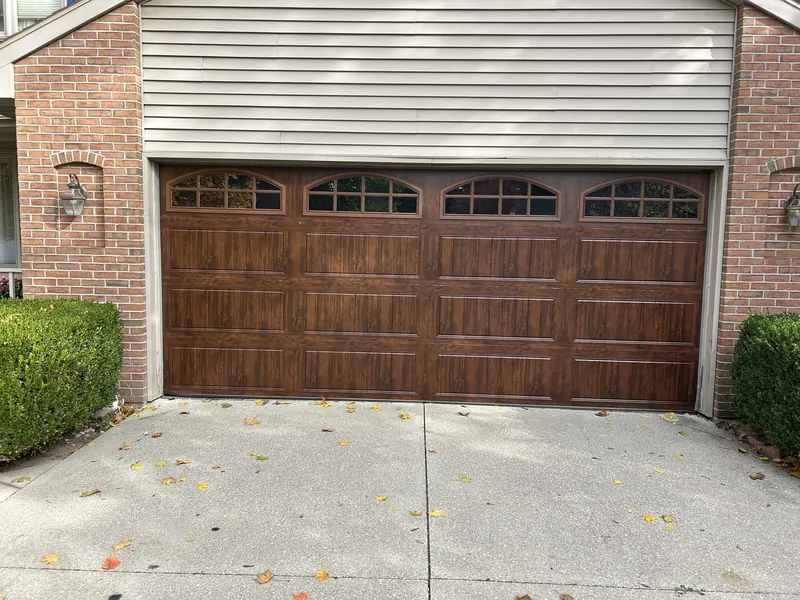
New garage doors
Insulated steel, carriage house, modern and full glass. We measure in person and give you one price.
Repair or replace questions
Is it cheaper to repair a garage door or replace it?
It's almost always cheaper to repair, at least in the short term. A broken spring, a cable, or a single dented panel costs a fraction of a whole new door. Repair makes sense when the rest of the door is sound; replacement wins when you're fixing the same door over and over or the panels themselves are failing. We'll give you a free, up-front estimate on either path.
When should I replace my garage door instead of repairing it?
Replace when several things are failing at once, when the panels are rotted or rusted through, when you can't get matching sections for an obsolete door, when repairs are stacking up faster than they're worth, or when you specifically want insulation, quieter operation, or a new look. At that point you're putting good money into a door that's near the end.
How old does a garage door have to be before I replace it?
Age alone doesn't decide it. A structurally sound door under roughly fifteen to twenty years is usually worth repairing. Past that, parts get harder to match and the panels themselves start to fail, so a repair on an old door can be money toward something that won't last. Condition matters more than the number.
Can you replace just one panel of a garage door?
Often, yes. If the door is a make and model still in production and the color can be matched, we swap the single damaged section so it disappears. The catch is older or discontinued doors where matching panels no longer exist; then a single bad panel can force a full replacement. Either way you get a free, up-front estimate first.
Will you push me toward a new door?
No. We carry parts on the truck and price the repair up front, so the honest fix is usually the repair and we'll tell you so. We only point to replacement when the numbers and the door's condition genuinely call for it, and a new-door estimate is free and measured, never a pressure pitch.
More garage door guides
Are insulated garage doors actually worth it?
What R-value really means, when insulation pays off, and the DIY kit trap.
High-cycle springsAre lifetime garage door springs worth it?
When the higher-cycle upgrade pays for itself, and when a standard spring is plenty.
Choosing a companyBest garage door repair in Grand Rapids.
The local and national options, how they differ, and how to pick the right one.
Free estimates. No after-hours fee.
4.9 from 111 Google reviewsSame day service. You hear the price before any work begins.