How often should you service a garage door?
A garage door is the heaviest moving thing in most homes, and it runs thousands of times a year. Here's how often it needs a tune-up, the two-minute checks you can do yourself between visits, and why Michigan winters make annual service worth it.
4.9 from 111 Google reviews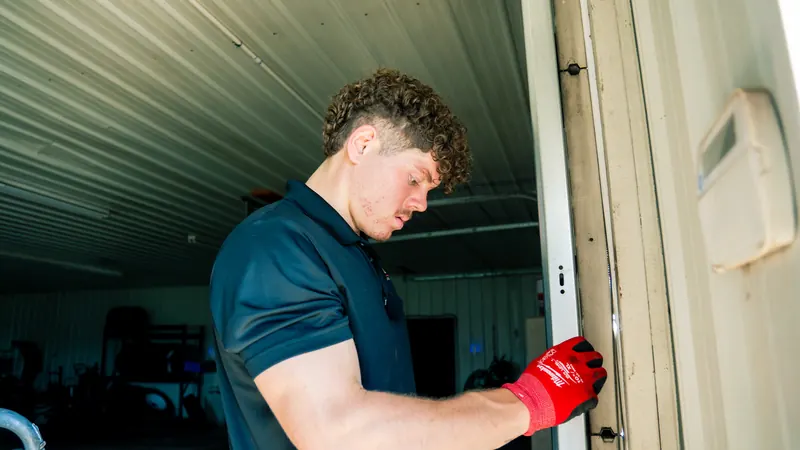
Most garage doors only get attention when they break. That's backwards. A door is a spring-loaded machine carrying 150 pounds or more, and the parts that fail (springs, cables, rollers, the opener gear) wear out on a schedule you can see coming. A little upkeep keeps it quiet, keeps it safe, and turns surprise breakdowns into planned, cheaper repairs.
How often: once a year for most homes
For an average household (a door that opens and closes three to five times a day), a yearly tune-up is the right cadence. If the garage is your family's main way in and out, you've got several drivers, or you're running the door well past that, move to twice a year. The reason is simple: springs and other parts are rated in cycles. The more you open the door, the faster you burn through that life, so a busy door needs eyes on it more often. We get into the cycle math in how long garage door springs last.
Why Michigan winters make annual service worth it
West Michigan is hard on a garage door, and the season does most of the damage. Cold makes spring steel more brittle. That's why so many springs let go on the first hard freeze, when a tired spring meets the coldest cycle of the year. Road salt and grit get tracked into the tracks and grind at the rollers. And the freeze-thaw swings off the lake stress every moving part and stiffen the lubricant. A tune-up in the fall puts fresh lube on everything, checks the balance and the safety reverse, and flags a worn roller or fraying cable before winter finds it for you.
The 2-minute checks you can do yourself
Between professional visits, four quick checks catch most trouble early. None of them involve touching a spring or cable.
1. The balance test
With the door closed, pull the manual release cord to disconnect the opener. Lift the door by hand to about waist height and let go. A balanced door stays put. If it slides down or pulls itself up, the spring tension is off. The opener has been compensating, and that wears it out early. Don't try to adjust the springs yourself; that's the call-a-pro line. Re-attach the opener when you're done.
2. The monthly safety-reverse test
The test has two parts, and both are quick. First the photo-eyes: close the door and wave a broom through the beam near the floor. The door should reverse. Then reverse-on-contact: lay a flat 2x4 on the floor in the doorway and close the door onto it. It should touch the wood and back off.
3. A visual look at cables, springs, and rollers
You don't touch anything. You just look. Scan the lift cables for fraying or a strand starting to unwind. Look at the spring on the bar above the door for any gap or a coil that's separated. Watch the rollers as the door runs: a roller that wobbles, drags, or has a flat spot is on its way out. Catch any of these and you can call before they strand you.
4. Light lubrication
Two or three times a year, hit the hinges, roller stems, springs, and bearings with WD-40. Wipe the tracks clean but don't grease the inside of them. Quiet operation is usually just clean, lubricated parts. We break down what each noise means in why is my garage door so loud.
What a pro 12-point tune-up adds
The homeowner checks keep the door healthy day to day. A professional tune-up covers what isn't safe or practical to do yourself: measuring and adjusting spring balance, checking cable wear and drum seating, swapping failing rollers, aligning the tracks, tuning the opener's force and travel limits, tightening all the hardware, and verifying the safety systems under load. That's the heart of our maintenance & tune-up service. A spring about to snap or a cable about to fray is far cheaper to catch on a tune-up than to fix on the morning the car's trapped inside. If it does come to that, the spring replacement comes with a free estimate.
Garage door tune-up
A 12 point check that keeps the door quiet and catches worn parts before they break.
Maintenance questions
How often should a garage door be serviced?
Once a year is right for an average household (roughly three to five open-and-close cycles a day). If your door is your main entrance, you have several drivers, or you're running well past that, service it twice a year. Heavy use simply wears the springs, rollers, and opener faster.
What's the garage door balance test?
With the door closed, pull the manual release cord to disconnect the opener, then lift the door by hand to about waist height and let go. A balanced door stays put. If it slides down or wants to fly up, the spring tension is off. That's a job for a tech, so don't adjust it yourself. Re-attach the opener when you're done.
How do I test the auto-reverse safety feature?
Do two checks each month. For the photo-eyes: close the door and wave a broom through the beam near the floor. The door should reverse. For reverse-on-contact: lay a 2x4 flat on the floor in the doorway and close the door onto it. The door should hit the wood and reverse. If either fails, stop using the opener and have the safety system checked.
Why does a garage door need annual service in Michigan?
West Michigan winters are hard on a door. Cold makes spring steel more brittle and is when tired springs snap, road grit and salt grind at the rollers and tracks, and freeze-thaw swings stress every moving part. An annual tune-up before winter keeps things lubricated and catches a worn part before the first hard freeze finds it.
What does a professional tune-up include that I can't do?
A 12-point tune-up covers what isn't safe or practical at home: measuring and adjusting spring balance, checking cable wear and drum seating, swapping failing rollers, aligning the tracks, tuning the opener force and travel limits, and verifying the safety systems. We give you a free estimate, and the visit pays for itself by catching failures early.
More garage door guides
How to lubricate a garage door
The six spots that need lube, the right product, and the track myth that makes doors worse.
Insulated doorsAre insulated garage doors actually worth it?
What R-value really means, when insulation pays off, and the DIY kit trap.
High-cycle springsAre lifetime garage door springs worth it?
When the higher-cycle upgrade pays for itself, and when a standard spring is plenty.
Free estimates. No after-hours fee.
4.9 from 111 Google reviewsSame day service. You hear the price before any work begins.